Sheep grazing on grassy trail near a lake surrounded by hills under clear sky.Hiking trail with grazing sheep by a lake surrounded by grassy hills under clear sky.
South Greenland

South Greenland, fjords, Viking ruins, and green valleys

South Greenland is where almost all of Greenland's sheep farming happens. The fjords here are greener than anywhere else on the island, the summers are long enough to grow vegetables, and the Norse settlers who followed Erik the Red to these shores around 985 stayed for roughly 500 years.

Photo by Magnus B. Trolle - Visit Greenland

Old stone wall with grass on top in front of rocky hills and water with mountains in the background.

Where Greenland turns green, and where Norse settlers came first

South Greenland's landscape is unlike anything further north. The fjords are wide and sheltered, and grass grows on the valley floors in summer, long enough to graze sheep. Coming in by boat or plane, it doesn't quite look like the Greenland most people picture, which was exactly Erik the Red's intention when he named the island in 985 to draw settlers.

That Norse history is embedded in the land. Erik the Red's farm at Qassiarsuk, the cathedral ruins at Igaliku and the church at Hvalsey near Qaqortoq are among the best-preserved Norse sites in the North Atlantic. The Greenlandic communities that followed after the Norse vanished in the 15th century built a different life on the same ground, and that layering of histories gives the south its texture.

Photo by Aningaaq Rosing Carlsen - Visit Greenland

Discover South Greenland

Family sitting in a forest clearing, looking up at the trees, with one child pointing upward.

Photo by Magnus B. Trolle - Visit Greenland

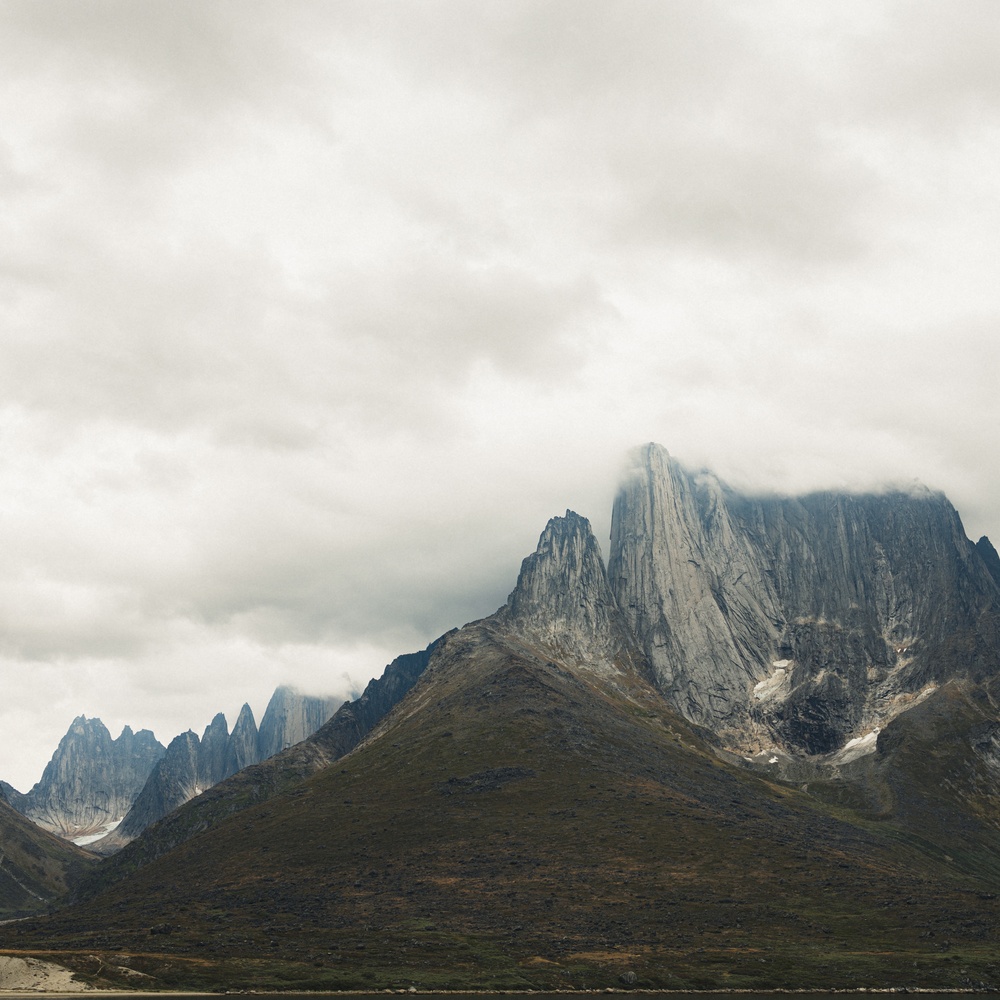
Jagged Tasermiut mountain peaks partly shrouded in clouds under a gray overcast sky.

Photo by Magnus B. Trolle - Visit Greenland

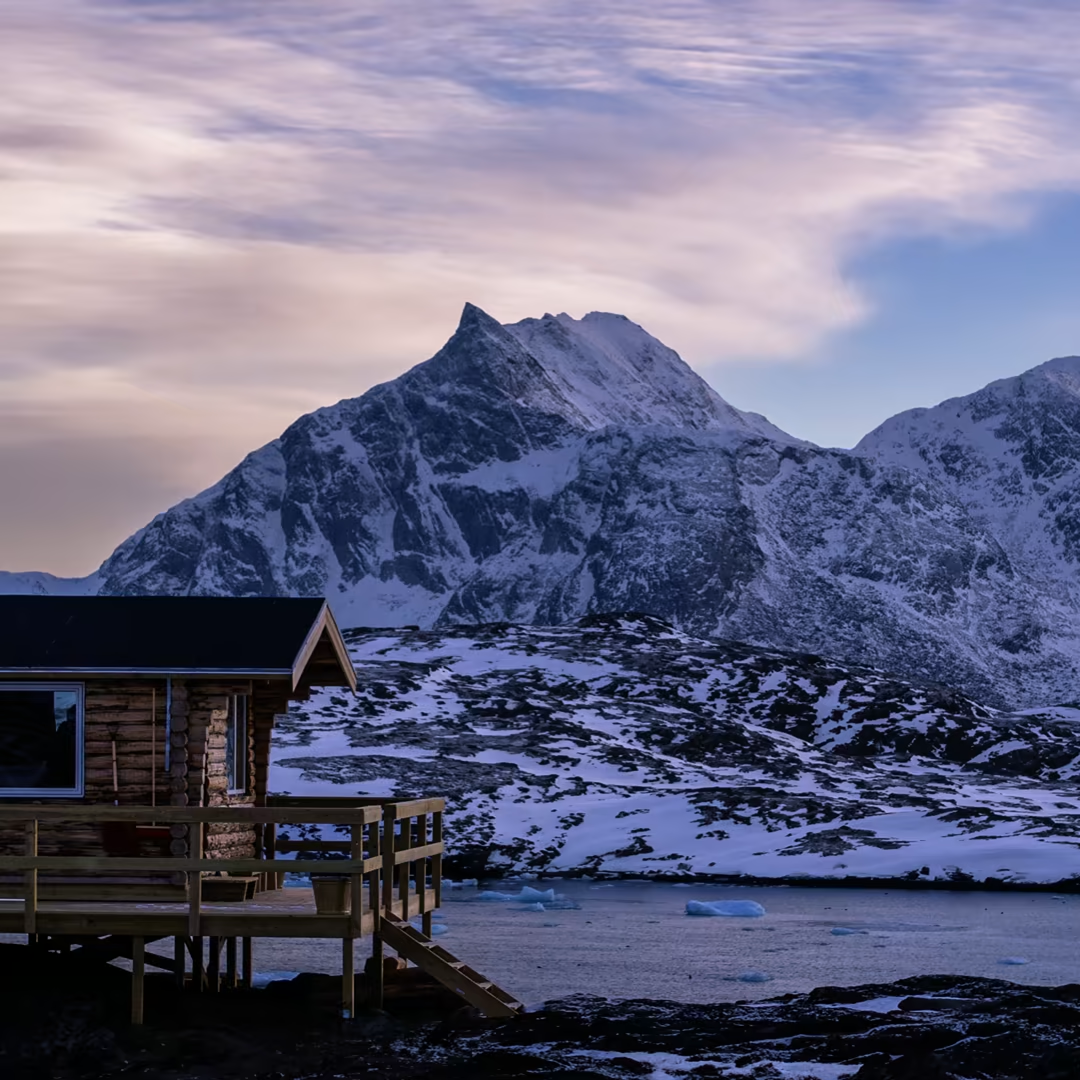
Small wooden turf house and covered wooden bell structure on grassy land by a body of water at sunset.

Photo by Magnus B. Trolle - Visit Greenland

Sunset over lake with scattered icebergs and hills on the horizon under a partly cloudy sky.

Photo by Magnus B. Trolle - Visit Greenland

Aerial view of dense green coniferous forest with varied tree shades and patches of mossy ground.

Photo by Aningaaq Rosing Carlsen - Visit Greenland

Stone ruins formed by large, flat rocks stacked to create an archway over grass and flowers.

Photo by Aningaaq Rosing Carlsen - Visit Greenland

Three people walking on grass near a small red house with hills and glacier in the background.

Photo by Aningaaq Rosing Carlsen - Visit Greenland

Aerial view of a small village with colorful houses near a lake and rocky hills in the background.

Photo by Aningaaq Rosing Carlsen - Visit Greenland

Night view of boats docked in a harbor with reflections of town lights on calm water under a starry sky.
Sunlit coastal town with colorful houses, a harbor with boats, hills, and calm sea at sunset.

Photo by Aningaaq Rosing Carlsen - Visit Greenland

The towns, the seasons, and how to get to South Greenland

Most trips to South Greenland now arrive directly into Qaqortoq, which opened its first fixed-wing airport in April 2026. Connections run year-round from Nuuk, with seasonal flights from Keflavík in summer. From Qaqortoq, boat and helicopter reach Narsarsuaq, Narsaq, Igaliku, and Qassiarsuk.
Get in touch with your dates and we'll put together a route.

Narsarsuaq

Narsarsuaq was the main entry point for South Greenland for decades — the airport here was built as a US military base in World War II. With Qaqortoq's new airport now open, Narsarsuaq is no longer the primary gateway, but it remains a useful base for the northern part of the region and the start point for the hiking route to Igaliku.

The surrounding landscape is good from day one: the Blue Ice Glacier is a short walk from the terminal, and the view from the hillside above town covers a long stretch of Tunulliarfik fjord. The Greenland Arboretum, just outside town, is one of the more unexpected things in the country — a collection of trees planted to test what grows at this latitude, now established enough to read as a small woodland.

Hiking from Narsarsuaq toward Igaliku is a one–two day walk through open tundra and over ridges. The route is marked; a local guide is recommended for the longer sections.

Photo by Mads Pihl - Visit Greenland

Small settlement with buildings near a runway surrounded by mountains and autumn foliage.

Qaqortoq, the colourful capital of the south

Qaqortoq is the largest town in South Greenland, home to around 3,000 people, and since April 2026 the region's main gateway by air. It rises in tiers of colourful houses around a natural harbour, with the oldest part dating to the 18th century, including the town's old fountain, the only one of its kind in Greenland.

What sets Qaqortoq apart is the Stone & Man project, an open-air gallery of more than thirty sculptures carved directly into the rock faces and boulders around town, free to wander at any hour. Beyond the centre lie the Norse church ruins at Hvalsey, among the best preserved in the North Atlantic and reachable by a short boat trip, and the warm natural pools at Uunartoq hot springs out in the fjord. With hotels, restaurants and onward connections, Qaqortoq makes the natural base for the south.

Photo by Magnus B. Trolle - Visit Greenland

Aerial view of a coastal town with colorful houses, rocky hills, boats, and calm water at sunset.

Igaliku, Norse cathedral ruins in a green valley

Igaliku is one of the most beautiful settlements in Greenland, a tiny community of stone-built houses set in a green valley between two fjords. It stands on the site of Gardar, the religious and political seat of the Norse settlement, and the ruins of its medieval cathedral still rise among the meadows, with carved sandstone blocks reused in the walls of later buildings.

Today Igaliku is a quiet farming hamlet of just a few dozen people, reached by boat and a short walk over the isthmus. It is the end point of the popular hike from Narsarsuaq and a peaceful place to stay overnight, with sheep on the hillsides, deep history underfoot and some of the gentlest scenery in the country.

Photo by Reinhard Pantke - Visit Greenland

Small colorful houses in a green valley by a blue fjord with snow patches on tall mountains under clear sky.

The seasons, Greenland's mildest corner through the year

South Greenland has the mildest climate in the country, and the seasons are gentler here than anywhere further north. Summer, from June to August, is the main season: green valleys, long days, sheep on the hills and the warmest temperatures in Greenland, ideal for hiking, boat trips, the hot springs and visiting the Norse ruins. It is also when the seasonal flights from Iceland run.

Autumn turns the valleys gold and brings the first northern lights back in September, while the air stays crisp and clear. Winter is cold but less extreme than the north, with snow on the peaks, aurora overhead and a quiet, settled rhythm to the settlements. Spring comes early by Greenlandic standards, with the land greening while the rest of the country is still frozen.

Photo by Stephanie Vermillion - Visit Greenland
Small house near grassy field with fjord and mountains glowing pink in sunset light.

Getting there, your route into South Greenland

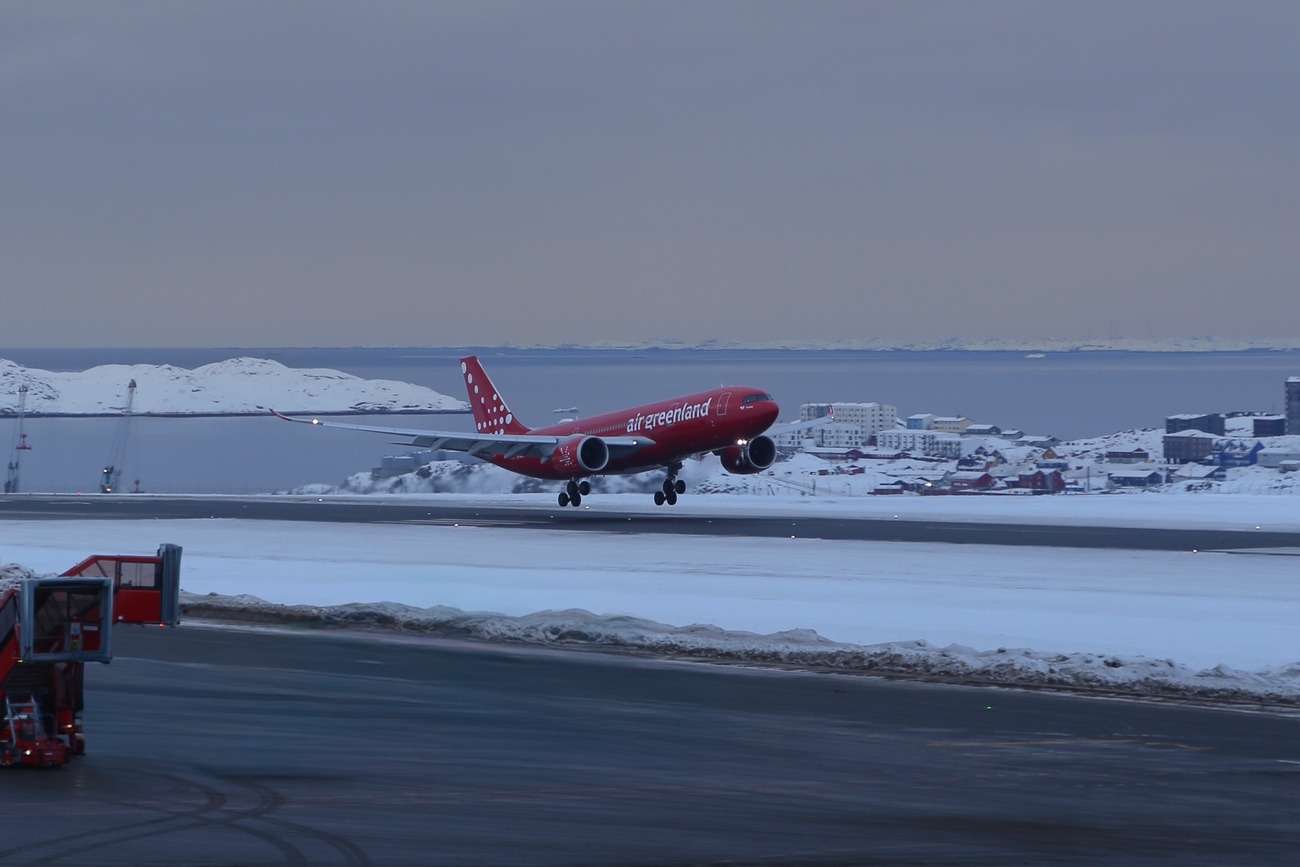
South Greenland is easier to reach than ever. Since April 2026, the new airport at Qaqortoq has been the region's main gateway, with flights connecting year-round through Nuuk and seasonal summer routes from Keflavík in Iceland. The airport replaced Narsarsuaq, which for decades was the only fixed-wing way in.

From Qaqortoq, the smaller settlements of Narsaq, Igaliku and Qassiarsuk are reached by boat, by helicopter and, in places, on foot, with marked hiking routes linking several of them. Distances are short and the fjord journeys are scenic in their own right. Tell us your dates and we'll put together a route that ties the towns, the ruins and the landscape into one trip.

Red Air Greenland plane taking off from snowy runway with a snowy town and sea in the background.
Aerial view of two people swimming in a small round hot spring surrounded by rocks and grass.

The hot spring at Uunartoq, what a day there looks like

Uunartoq is a small island about 60 kilometres west of Qaqortoq, in a fjord system surrounded by mountains and drifting ice. Three natural hot pools sit at the water's edge, warm enough to sit in comfortably, open to the sky, with icebergs visible in the fjord on most days of the season. There's no infrastructure beyond a small landing area. You arrive by boat, you get in, and that's the experience.

The trip from Qaqortoq takes around two to three hours each way by boat, passing through fjord scenery that's worth the journey on its own. It runs as a day trip between June and September, when the pools are accessible and the weather allows. Most people who do it say it was the thing they least expected to find in Greenland, and the thing they most remember.

Photo by Magnus B. Trolle - Visit Greenland
1 / 5

What our guests say:

"Raw Arctic is incredible. If you are heading to Greenland, Raw Arctic this is your tour/adventure company! We hiked, biked, fished, boated, had an incredibly memorable lunch and learned so much while having tons of fun. Isak and Anita were top notch professionals and will take excellent care of you. 10/10"

Russel Diamond

United States

Common questions about South Greenland

Everything you need to know before visiting the Norse ruins, fjords, and sheep farms of South Greenland. Get in touch if your question isn't here.

Why does South Greenland look so different from the rest of the country?

It's the furthest south and sits below the pack ice belt that affects the rest of the west coast. The fjords here are sheltered enough to warm up properly in summer, the growing season is longer than anywhere else in Greenland, and the landscape in the inner valleys genuinely does look green from June through September. It's still Arctic — just a milder version of it.

How well preserved are the Norse ruins?

Remarkably well. The church at Hvalsey near Qaqortoq still stands almost to its full height and is one of the best-preserved Norse buildings anywhere in the North Atlantic. Erik the Red's farm at Qassiarsuk and the cathedral ruins at Igaliku are more fragmentary but still clearly readable in the landscape, with foundations, walls and reused sandstone blocks. Several sites form part of the UNESCO-listed Kujataa farming landscape. They're open to walk among, and a guide brings the history to life.

Can I visit the hot spring at Uunartoq?

Yes, in summer. Uunartoq sits on an island in the fjords south of Qaqortoq, where three natural pools sit at the water's edge, warm enough to bathe in, open to the sky, with icebergs often drifting past. It runs as a boat day trip from Qaqortoq between roughly June and September, when the pools are accessible and the weather allows. The journey through the fjord is a highlight in itself.

What is the hiking like? Do I need a guide?

South Greenland has some of the gentlest and most rewarding hiking in the country, from short valley walks to multi-day routes linking the settlements, the best known being the one to two day walk from Narsarsuaq to Igaliku. Trails cross green tundra, ridges and old Norse farmland rather than ice, so they suit a range of fitness levels. Many routes are marked and can be walked unguided, but a local guide is worth it on the longer or less travelled sections, both for navigation and for the history along the way.

When are the ferries running?

The settlement boats and ferries around South Greenland run mainly in the ice-free season, roughly late spring through autumn, connecting Qaqortoq with Narsaq, Igaliku, Qassiarsuk and the smaller communities. Sailings are less frequent than flights and are weather dependent, and winter service is reduced. Because schedules shift by season and year, we always check current timetables when planning, so it's best to tell us your dates and let us build the connections around them.

We’re arriving by cruise ship — can we fit a tour in our port time?

Often, yes. Qaqortoq and Narsaq are both regular cruise stops, and a half-day ashore is enough for the town highlights, the Stone & Man sculptures, a short fjord trip or a visit to a nearby Norse site. Send us your ship's schedule and we'll suggest something that fits your time in port and gets you back aboard comfortably.

What should I pack for South Greenland?

Pack for changeable Arctic weather, even in summer. Warm layers are essential, with a windproof and waterproof outer layer, plus a hat and gloves for boat trips and cooler evenings. Sturdy waterproof footwear handles the trails and farm tracks, and you'll want sunglasses and sunscreen for long, bright days. If you plan to visit Uunartoq, bring a swimsuit and a towel for the hot springs.

Let's plan your trip to South Greenland

Tell us what draws you south, the Norse ruins and Kujataa's green farmland, the hot springs at Uunartoq, fjords full of drifting ice or quiet hikes between the settlements, and we'll shape a journey around it. Local knowledge, your pace, and the kind of Arctic days you'll remember for life.

Please fill out the form

We will get back to you as soon as possible

Thank you! Your submission has been received!
Oops! Something went wrong while submitting the form.